CoCoFEST 34 Hotel Information

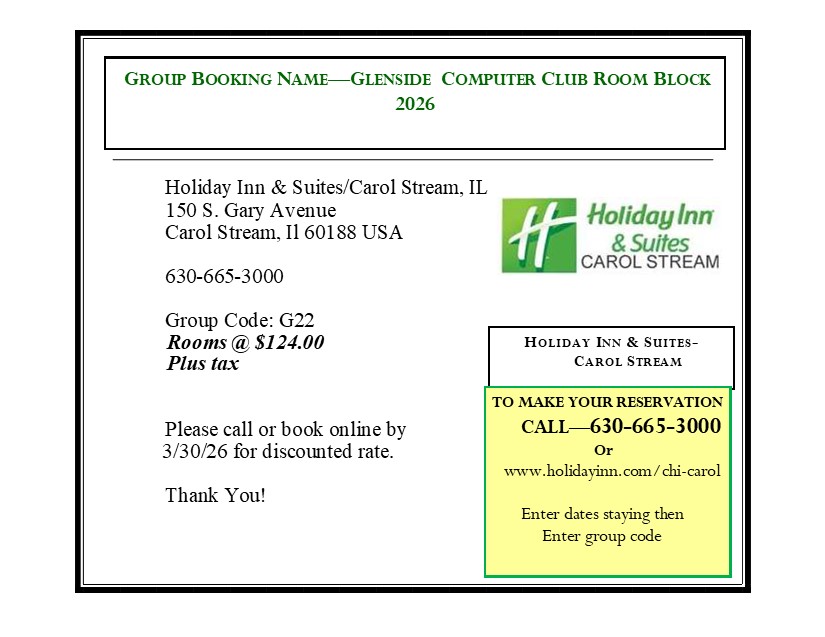
I am happy to announce that we have signed the contract will the hotel for next year’s CoCoFEST. We will be having it at the same location as the past several years. They have kept the room rates at the same prices as last year, and you can start booking the room today. I will be updating the CoCoFEST website page later this week, but I wanted to get this out to everyone this weekend. This year’s code to get the in the room block at the discount rate is G22. If you have any questions or concerns please reach out to myself, Grant Leighty at cocofest@glensideccc.com.

The room block dates are Wednesday April 22, 2026 – Sunday April 26, 2026

King Bed Deluxe Room: $124.00 +tax a night

Two Queen Beed Deluxe Room: $124.00 +tax a night

Two Room King Beds Suite with pull out Sofa: $144.00

Two Room Queen Beds Suites with pull out Sofa: $154.00

The last day to book your room is March 30th at Midnight

Click the picture above for additional information about the hotel.

Shares

The MultiSensory Sound Laboratory, Part 2

Recently, I had the opportunity to chat with Norman Lederman, of Oval Window Audio (http://www.ovalwindowaudio.com/) about his company’s MultiSensory Sound Laboratory (MSSL). The solution, detailed in my previous note, utilized a TANDY Color Computer, as well as an Audio Spectrum Analyzer cartridge, to help hearing impaired students “see” sound. I’d been added to the conversation after Norman initially contacted our past treasurer Eric Canales. As part of the discussion, Norman noted that his company was no longer offering the solution to schools and other educational facilities and he was interested in donating some excess stock to our club.

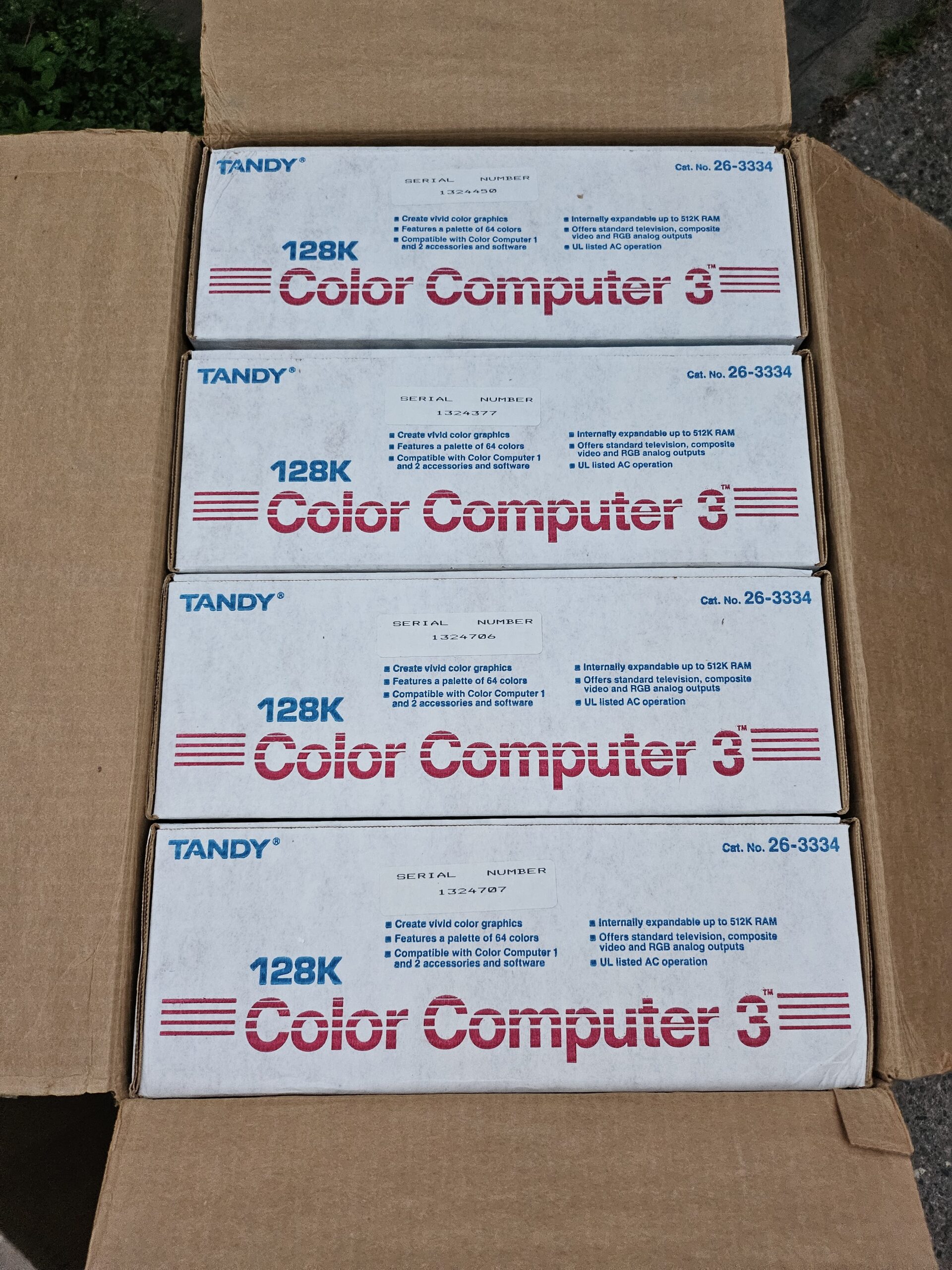
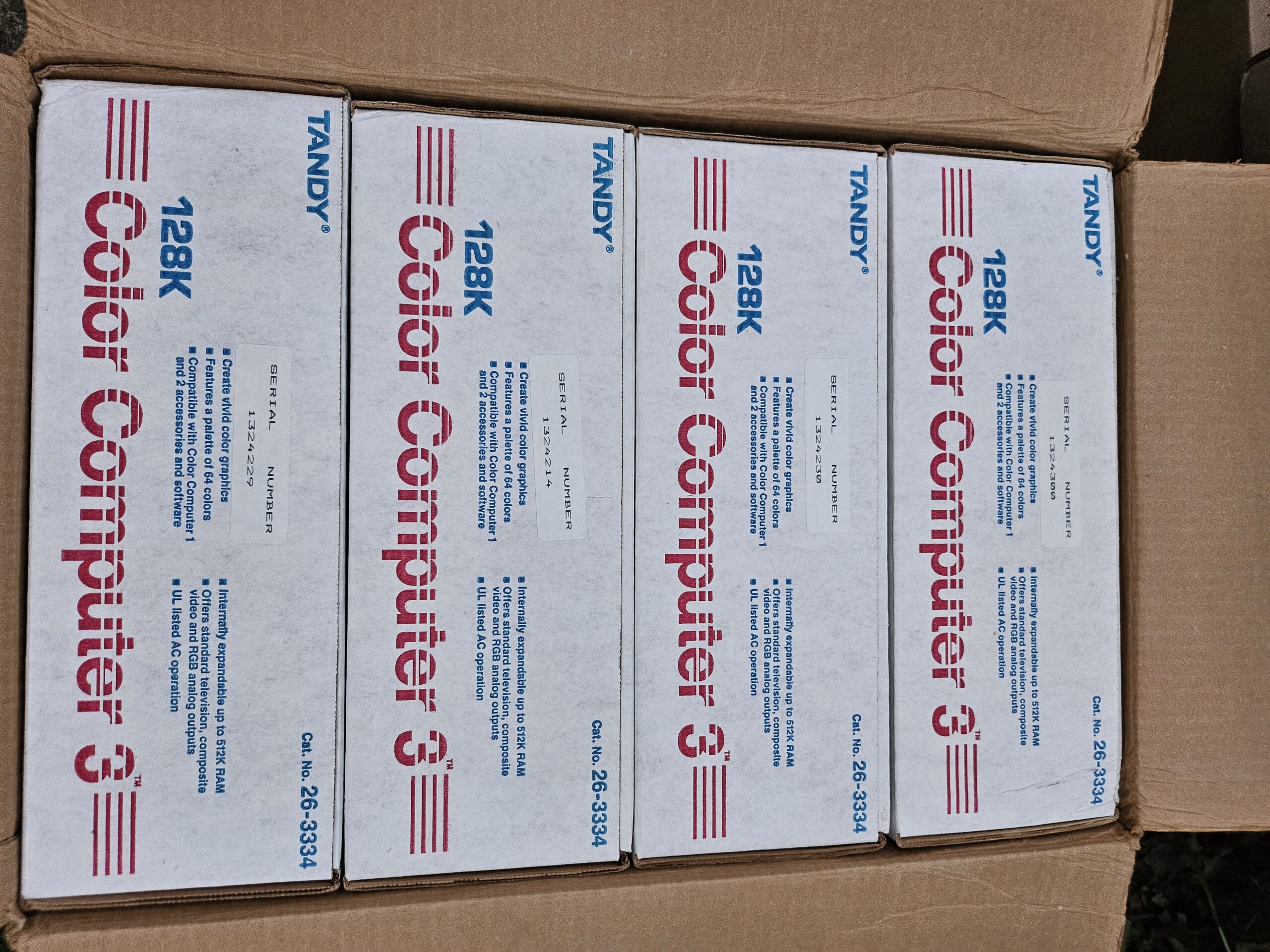
Glenside Color Computer Club is always interested in donations, and I told told Norman as much. Given that Norman (and the donations) were in Colorado, we arranged to have the items shipped. Norman described what would be arriving in the shipment, but I was not prepared for what I saw as I opened the 4 boxes:

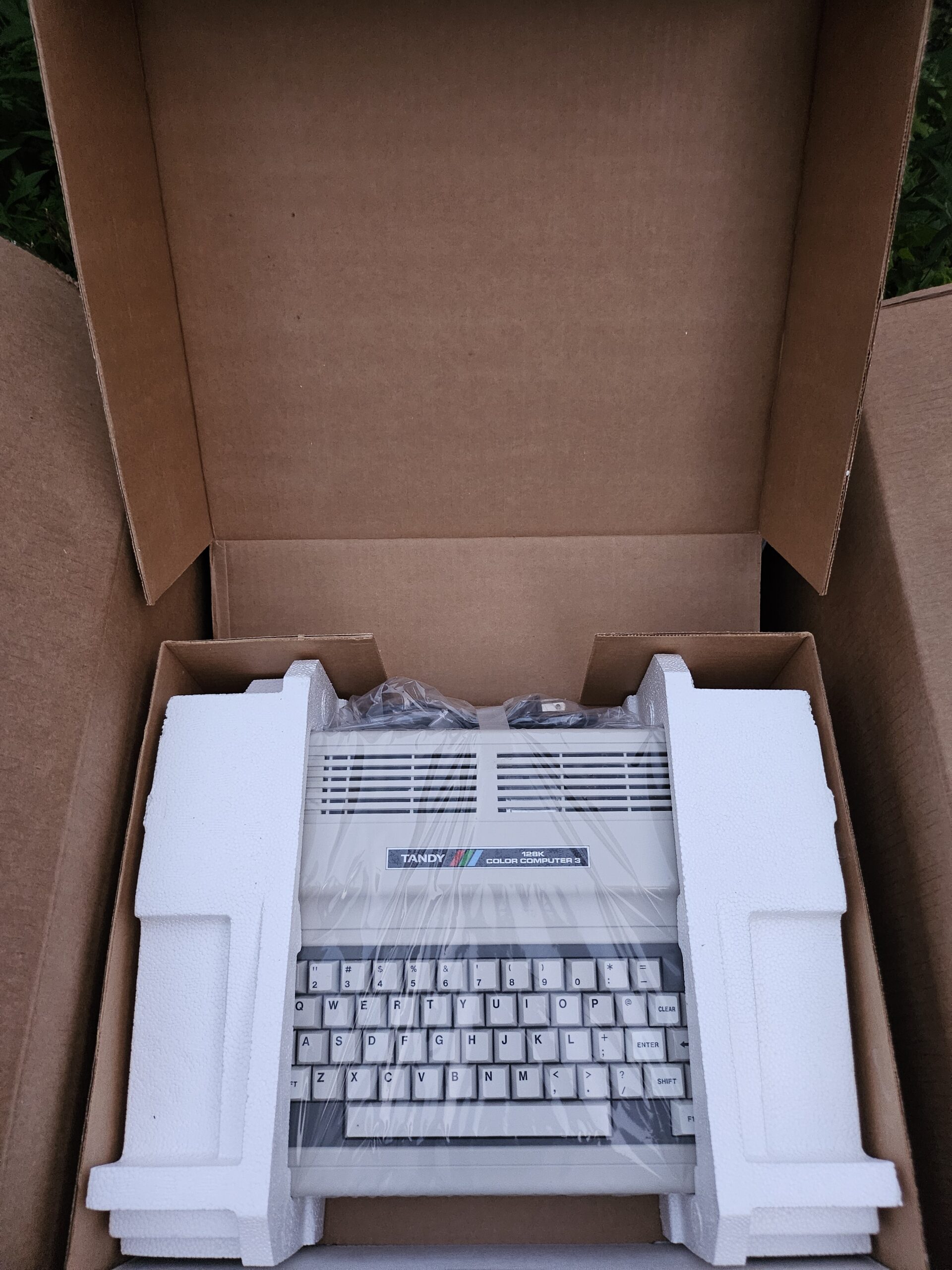
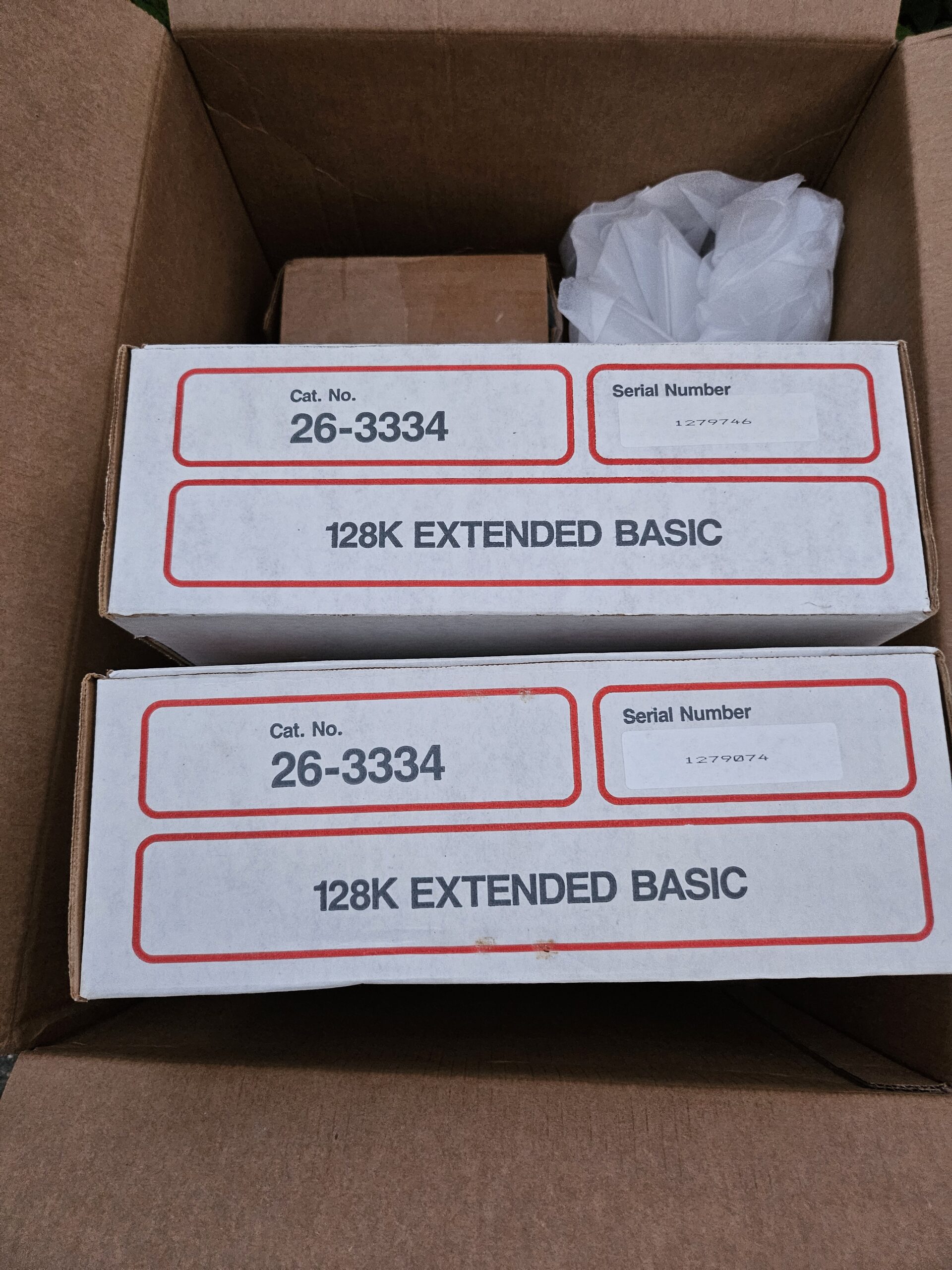
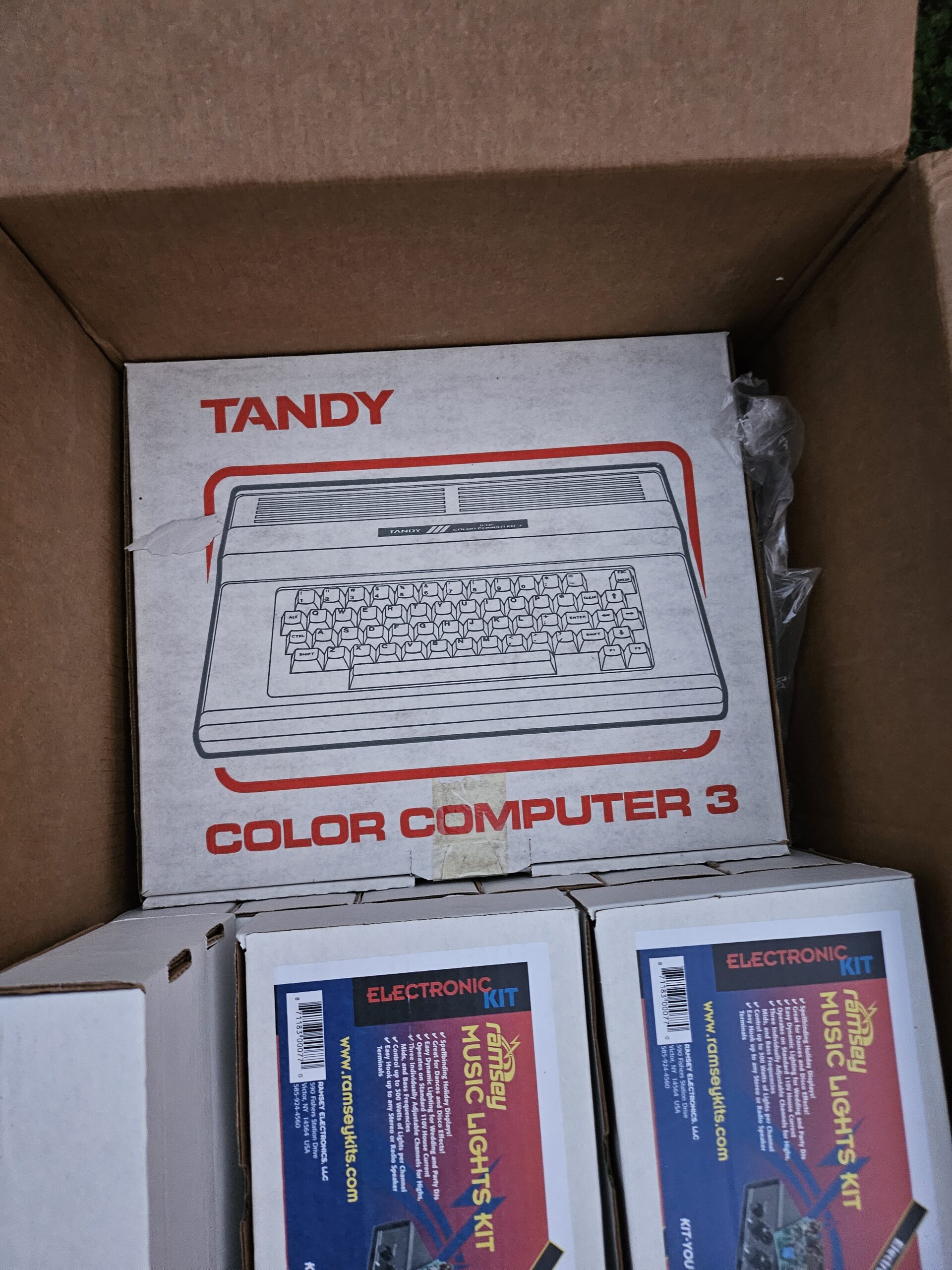
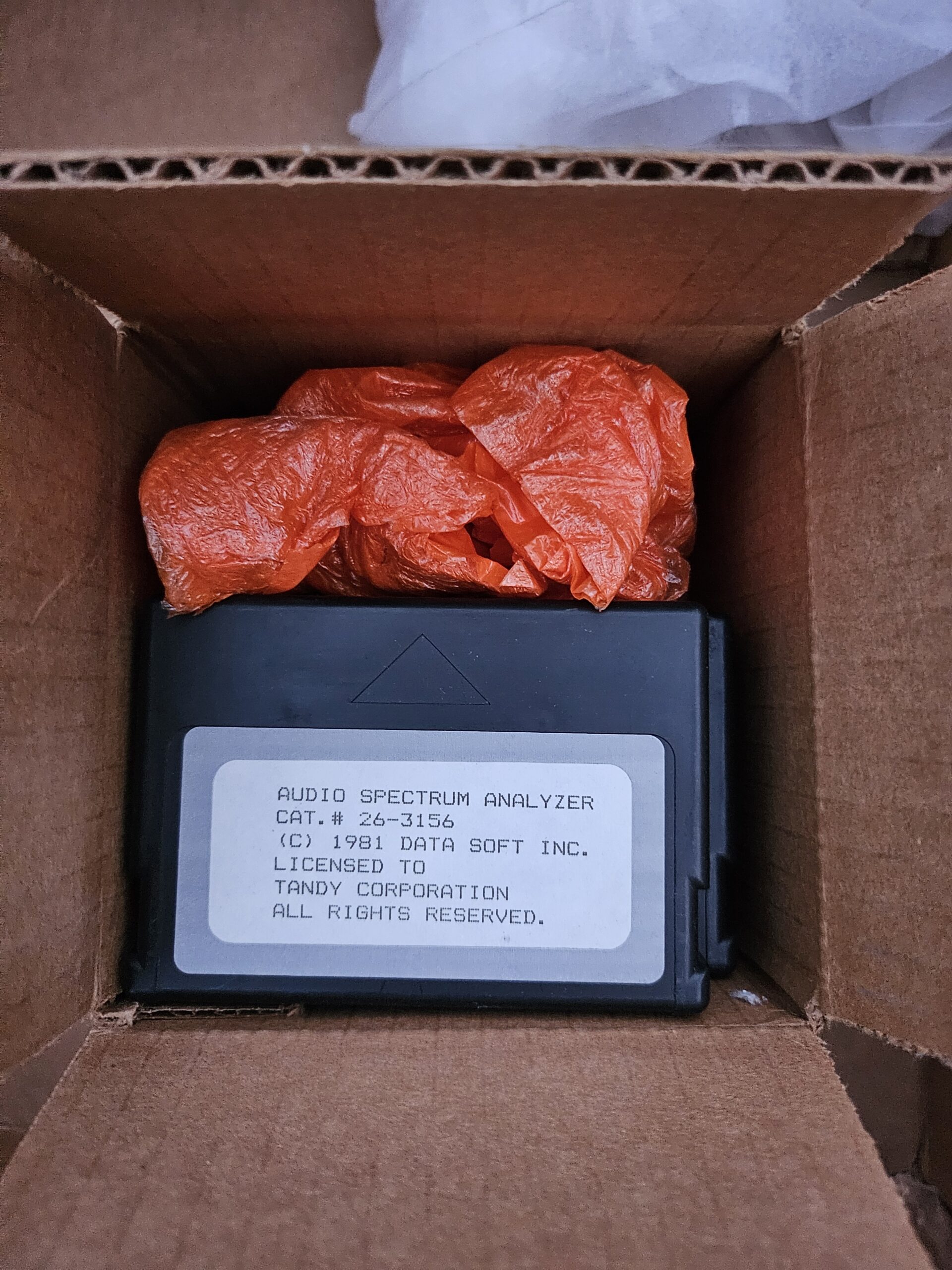
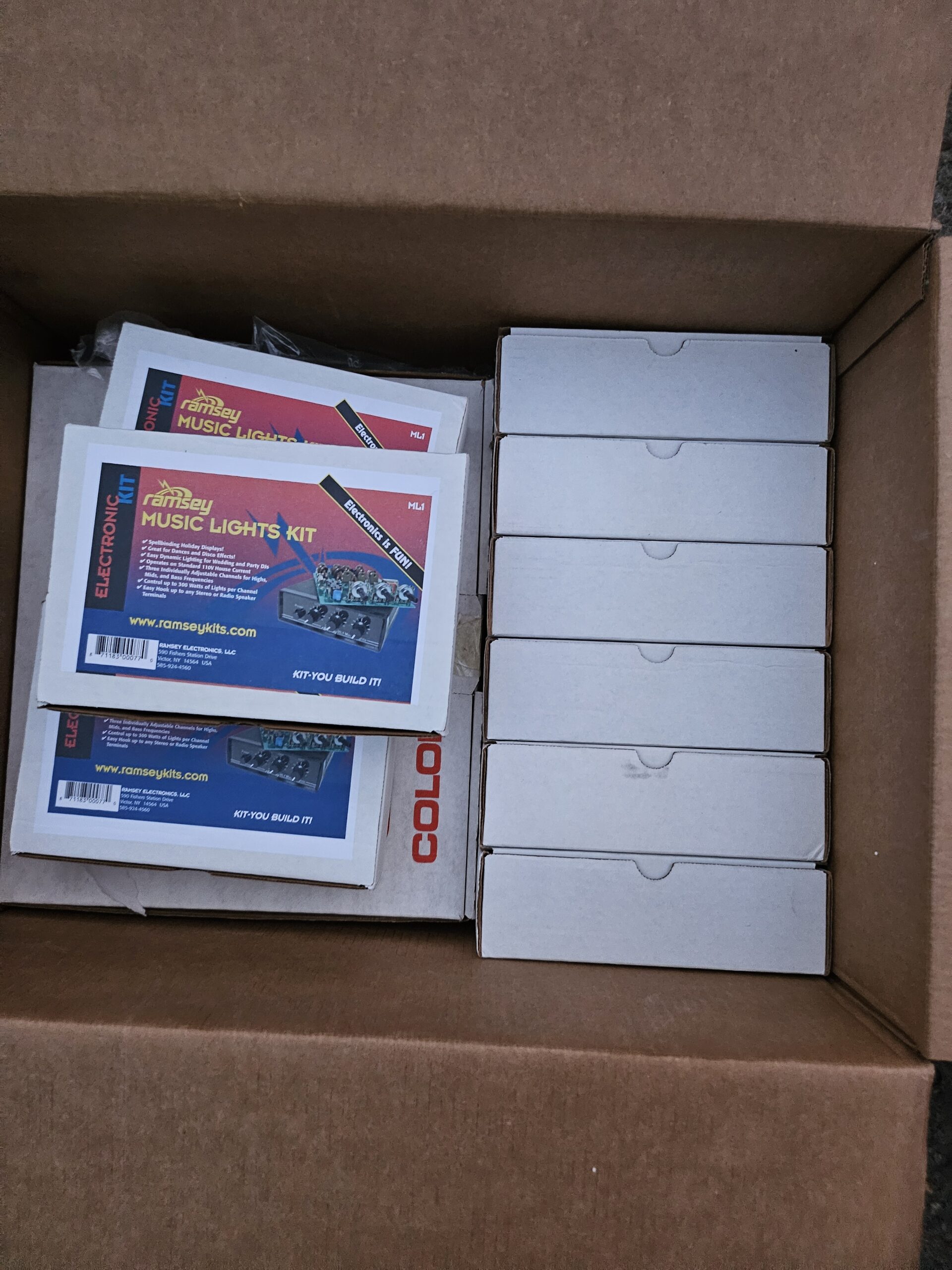
Within the shipment was eleven (11!) brand new TANDY Color Computer 3 units, in original plastic, mint in box. They do not look like they were ever touched. In addition, the shipment included 10 (one was shipped later and does not appear in the pictures) Ramsey Music Lights kits (used to to create the LumaSound light tower in the Multi-Sensory Sound Laboratory setup, and 9 Audio Spectrum Analyzer cartridges. Some have standard retail cartridge packaging, but a few sport a plain gray label with typewritten text.

After the shipment arrived, Norman called me and discussed the MSSL project/product in more detail, while I shared some background on GCCC and the Color Computer community in general. I told him the club was very grateful for the donation, and we would work to ensure these items are enjoyed by our membership. Except for 1 of the Ramsey light kits (which I hope to solder up in hopes of creating an MSSL setup for the 2026 CoCoFEST!), the units will be stored in expectation of finding a new home during our 2026 show. And yes, if someone can point me to a cartridge reader program, I’ll cover the “CART” pin and see if the differently marked Audio Spectrum Analyzer cartridges contain different code than the regular version.

Shares

Glenside Club Meeting: Thursday August 14, 2025 @ 7:30PM Central

I hope you had the Summer you were wanting, whether it was packed full of events and trips, or laid back and quiet. For those who chose the quiet option, enjoy it for a few more weeks, as things are kicking up for Fall.

Glenside will once again be participating in the largest (as far as I know) classic computer festival, Vintage Computer Festival – Midwest, or VCF-MW (https://vcfmw.org/). While not a Color Computer specific show, the entire Tandy line was represented in 2024, and I expect the same this year. Last year’s show comprised 50,000 sq ft of classic computer (and telephone) awesomeness, and this year’s show will fill the expanded 66,000 sq ft space. For those that attended last year, expect more of the same. I know, as GCCC President, it may seem heretical for me to champion another show, but this is less a classic computer show and more a treatise on how much interest in classic computer still exists, across the brands.

Just a few weeks later, Tandy Assembly (https://www.tandyassembly.com/) touches down in Springfield, OH. Representing Glenside, show co-organizer Ian Mavric asked if I could present at the show, so I’ll be sharing some technical details on the CC3 MMU.

Mark Overholser just pointed out in Facebook that he’s starting to plan Tandy Retro Show 2026. Thus, if you have a project that you want to get in front of folks and it won’t materialize for VCF-MW or TA, TRS 2026 is your next best time to share. And, TRS2026 is not CoCo specific, so we welcome all Tandy options.

Finally, I realize I’ve not shared the confirmed date for the 34th Annual LAST Chicago CoCoFEST!, which is April 24 and 25, 2026. More details to follow.

Please join us this Thursday. As is standard, We will open the call a bit early at 7PM for some discussion and to help anyone with “technical difficulties”.

To join the Meeting

https://us06web.zoom.us/j/82797367585?pwd=OUxibkJaR2N1SUtSOU9EUUlYeXBJQT09

Meeting ID: 827 9736 7585
Passcode: GCCC

One tap mobile

+13126266799,,82797367585#,,,,*686821# (Chicago)

Meeting ID: 827 9736 7585
Passcode: 686821
Find your local number: https://us06web.zoom.us/u/kdIAqFZbZR

Please download and import the following iCalendar (.ics) files to your calendar system.
Monthly: https://us06web.zoom.us/meeting/tZYqfu6rqDwvEtGPAHF62Rhv1v5lakjdaO9W/ics?icsToken=98tyKuGqqTItGdKStRGCRpwQB4r4KOnwpmZYj7d6rD7NJXYBUAvgZ_QXPrN0GtzR

For those unable to join us on Zoom or have prior commitments, we will livestream and have a replay available on our YouTube channel (https://www.youtube.com/channel/UCFk2dMxcjJcX2qbSqFHQMbA). Recently, Facebook has made it harder to stream to their platform, but I’ll keep trying to stream to our Facebook page (https://www.facebook.com/groups/290791956162).
Shares

The MultiSensory Sound Laboratory, Part 1

Rewind back to the original days of the Tandy Color Computer 1, the early 1980’s. Now, imagine yourself as an adult wanting to help young people who struggle with sensory input. Some have hearing loss, while others can react poorly to loud noises or bright lights. In a magazine or via a trip to your local Radio Shack, you witness the CoCo Audio Spectrum Analyzer cartridge in use, and it gives you an idea. You can use the CoCo, along with the cartridge, to help folks visualize sound. You flesh the idea out a bit more, to reach as many as possible:

  • Source some audio devices that can connect to an amplifier and are easy for someone to quickly use, like a guitar,. microphone, and a piano keyboard
  • Feed that audio into an amplifier
  • Send the audio output to:
    • the CoCo1 (with the Audio Spectrum Analyzer cartridge),
    • general full range speakers
    • specially designed floor panels that will vibrate to audio frequencies,
    • an induction loop assistive hearing system (with some induction loop receivers for students to wear),
    • an oscilloscope,
    • A laser bouncing off a mirror directionally controlled by the audio,
    • and a 3 channel Ramsey Electronics “Music Lights” color organ, connected to 3 strings of light enclosed in a translucent column.

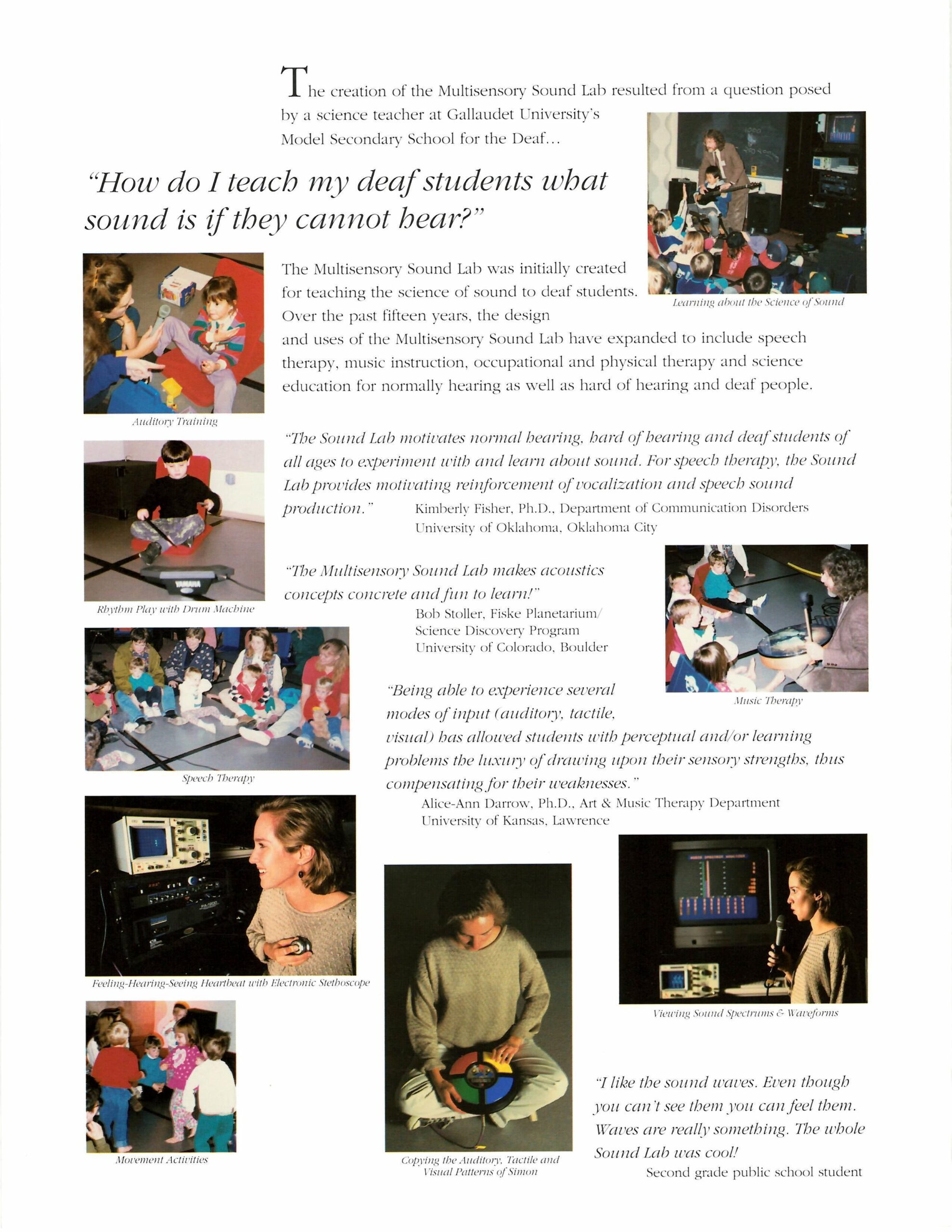
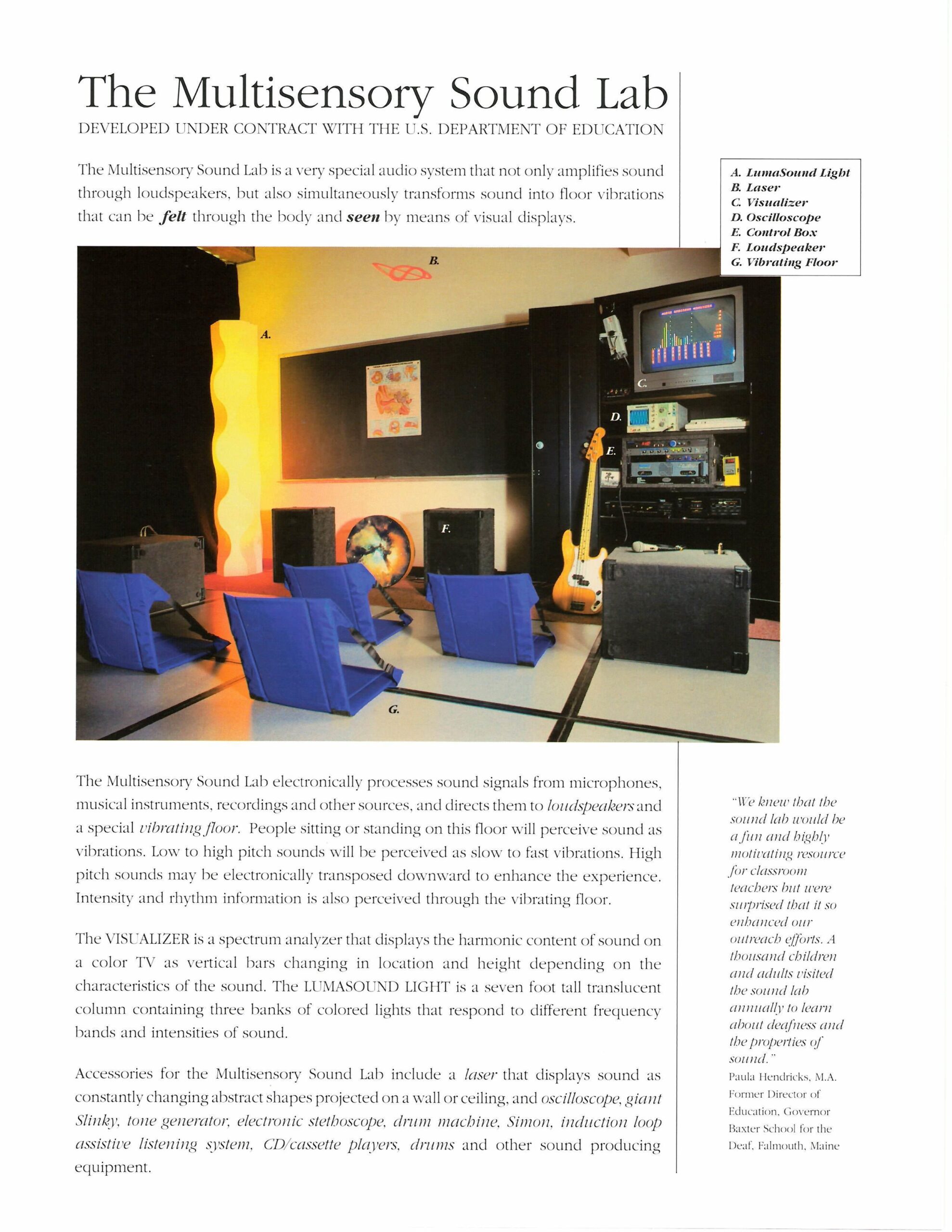
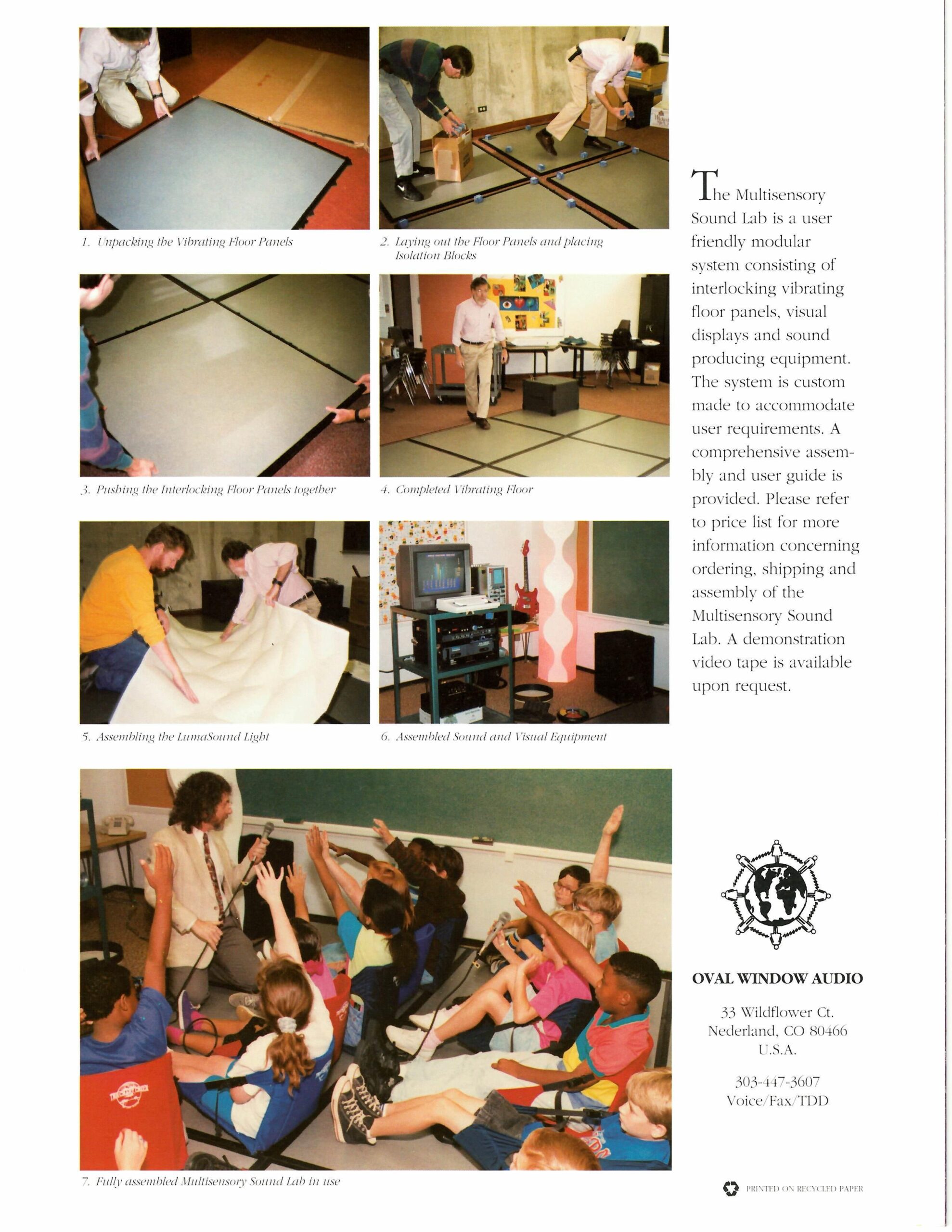
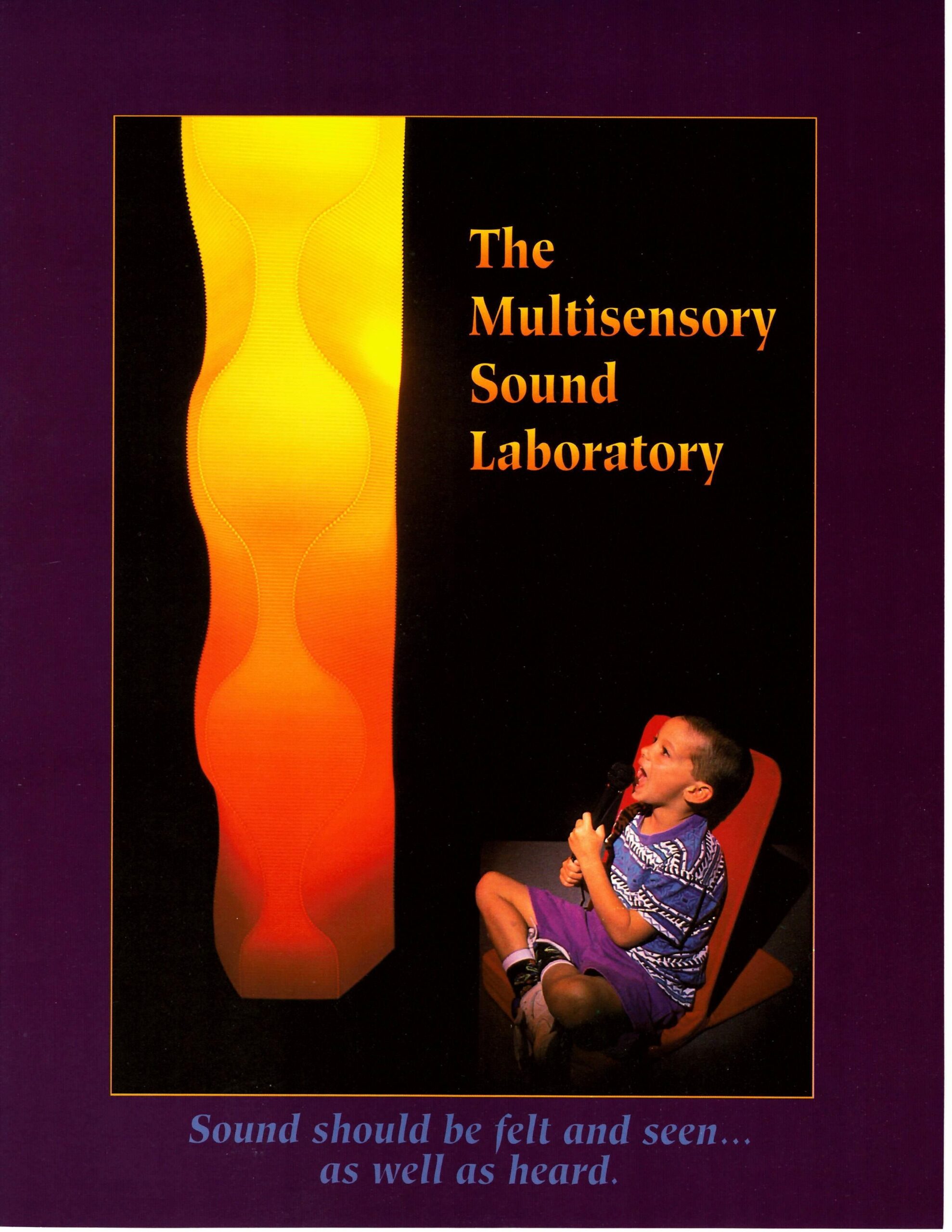
If you can imagine that, you and Norman Lederman of Oval Window Audio (http://www.ovalwindowaudio.com/) shared the same idea. Norman started playing around with the idea of using the CoCo 1 and the Spectrum Analyzer to provide a safe space for sensory connections in the early 1980’s, eventually receiving a grant from the Department of Education to commercialize and start offering the solution in 1984 for sale to educational facilities and other environments. Called the MultiSensory Sound Laboratory (http://www.ovalwindowaudio.com/soundlab1.html), the system noted: “Sound should be felt and seen… as well as heard”.

I could describe it in more detail, but Oval Window Audio does it best:

Since part of the appeal of the system was the CoCo1 and analyzer, it was described in detail as well:

This complemented Oval Window Audio’s core business, offering assistive listening systems for the hearing impaired, primarily the Induction Loop hearing assistance system. Induction Loop technology uses a thin wire located around the periphery of a room to transmit audio as a current loop. Specially designed receivers (and many current generation hearing aids) can then pick up the audio signal from the inductive pickup and convert for the device wearer. Inductive Loop offers many advantages over simply amplifying existing audio, as it cleanly amplifies the speaker without including background noise or other sound sources.

I reached out to Norman and we had a quick chat about the MSSL system, which was sold for many years into this century (he did want me to point out the system is no longer offered for sale), and he is happy to answer any questions our members may have. If you’d like to know more about this unique solution that featured the CoCo, send them our way. (I did ask if Norman would be willing to join a Zoom call and discuss, but he politely declined. He prefers email :-))

Since musical instruments are a common appearance at our annual CoCoFEST!, I am thinking about how we might set up a replica of this system at next year’s event. If you’re interested in helping, reach out.

Shares