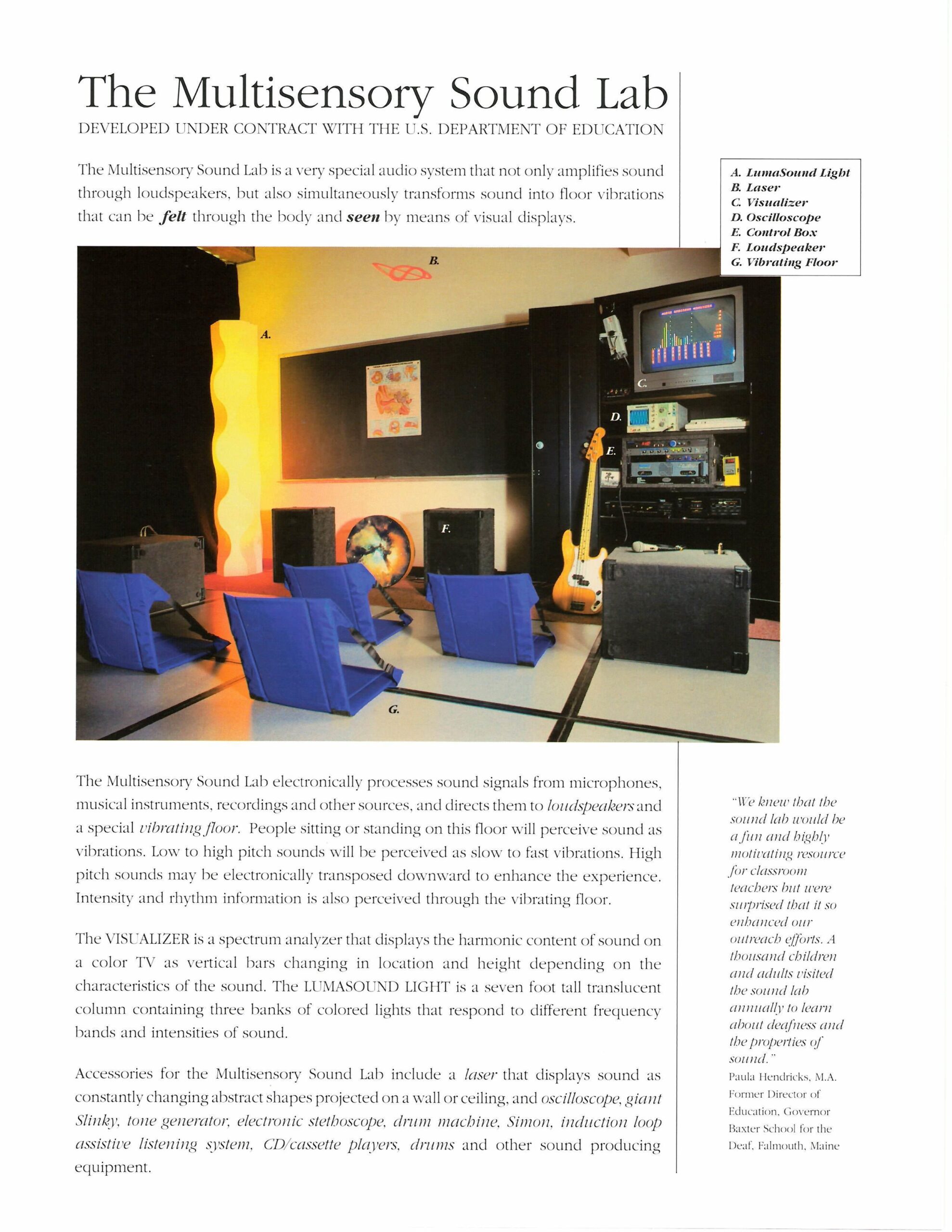
Rewind back to the original days of the Tandy Color Computer 1, the early 1980’s. Now, imagine yourself as an adult wanting to help young people who struggle with sensory input. Some have hearing loss, while others can react poorly to loud noises or bright lights. In a magazine or via a trip to your local Radio Shack, you witness the CoCo Audio Spectrum Analyzer cartridge in use, and it gives you an idea. You can use the CoCo, along with the cartridge, to help folks visualize sound. You flesh the idea out a bit more, to reach as many as possible:
- Source some audio devices that can connect to an amplifier and are easy for someone to quickly use, like a guitar,. microphone, and a piano keyboard
- Feed that audio into an amplifier
- Send the audio output to:
- the CoCo1 (with the Audio Spectrum Analyzer cartridge),
- general full range speakers
- specially designed floor panels that will vibrate to audio frequencies,
- an induction loop assistive hearing system (with some induction loop receivers for students to wear),
- an oscilloscope,
- A laser bouncing off a mirror directionally controlled by the audio,
- and a 3 channel Ramsey Electronics “Music Lights” color organ, connected to 3 strings of light enclosed in a translucent column.
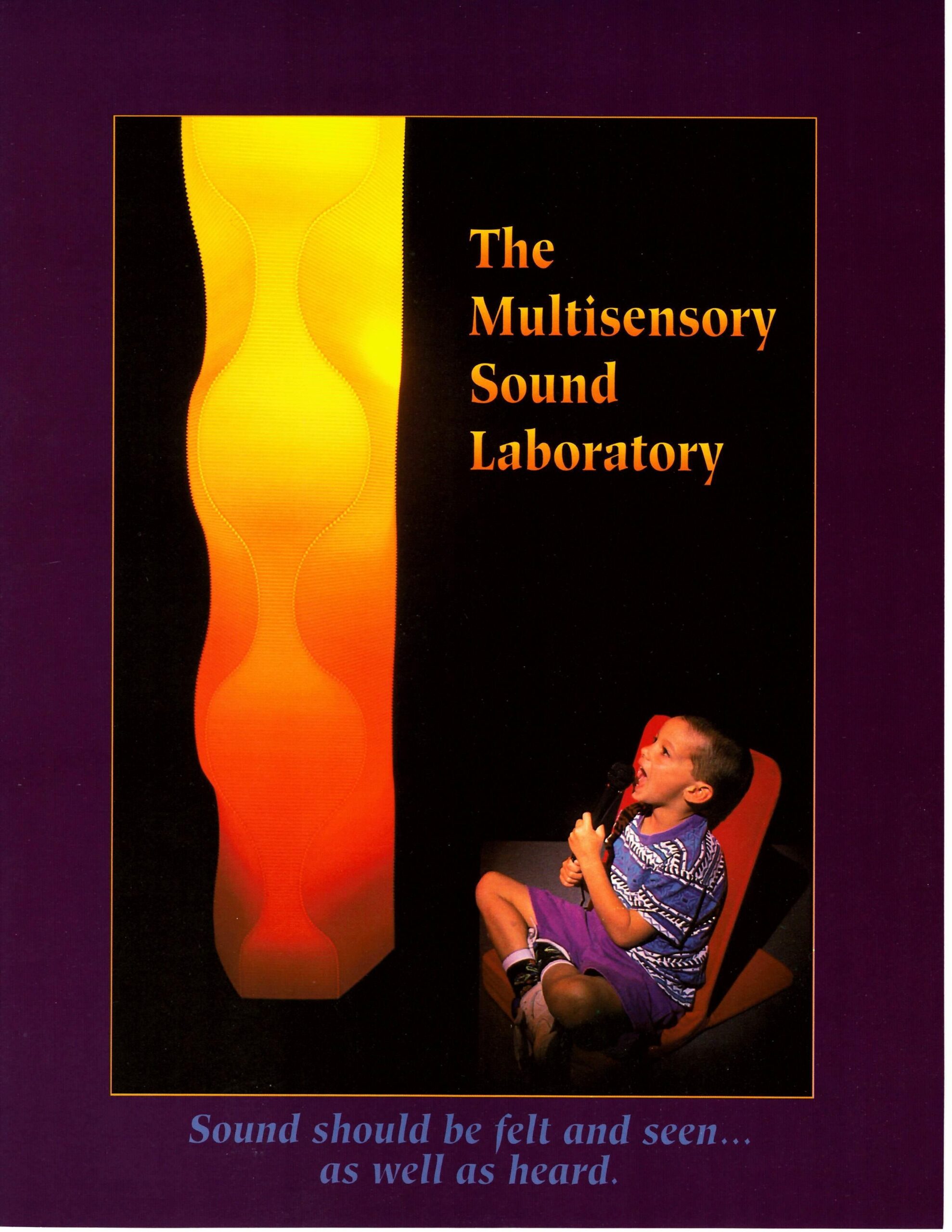
If you can imagine that, you and Norman Lederman of Oval Window Audio (http://www.ovalwindowaudio.com/) shared the same idea. Norman started playing around with the idea of using the CoCo 1 and the Spectrum Analyzer to provide a safe space for sensory connections in the early 1980’s, eventually receiving a grant from the Department of Education to commercialize and start offering the solution in 1984 for sale to educational facilities and other environments. Called the MultiSensory Sound Laboratory (http://www.ovalwindowaudio.com/soundlab1.html), the system noted: “Sound should be felt and seen… as well as heard”.
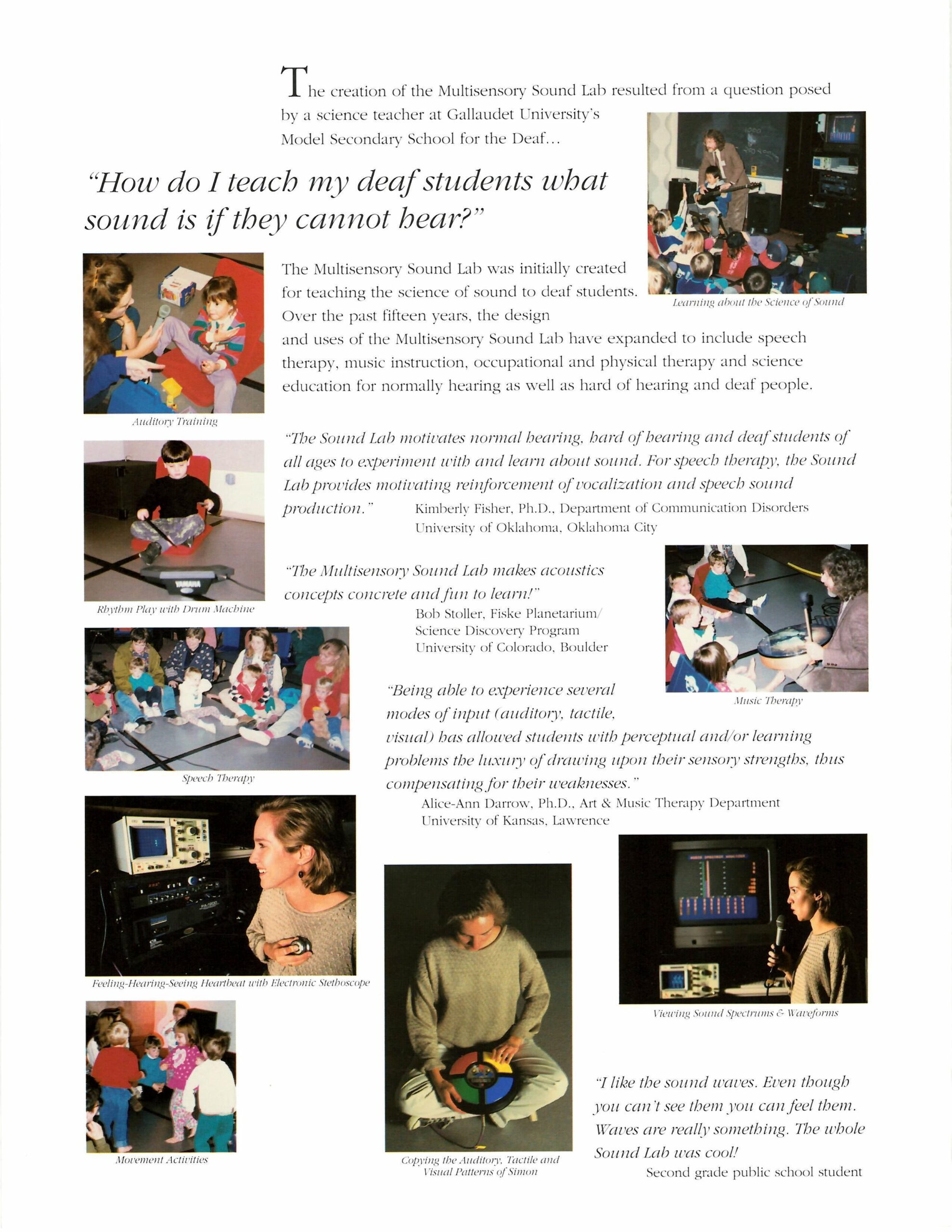
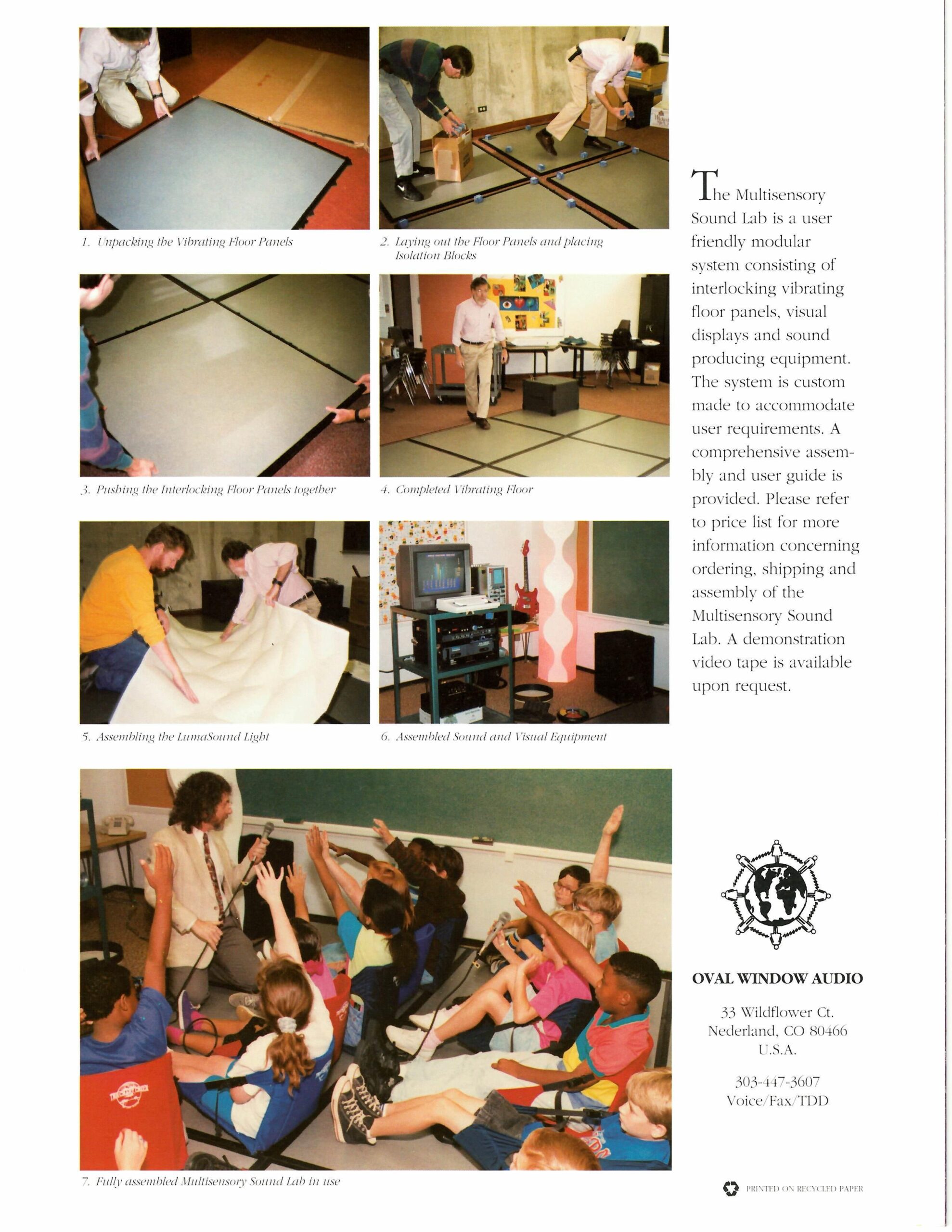
I could describe it in more detail, but Oval Window Audio does it best:
Since part of the appeal of the system was the CoCo1 and analyzer, it was described in detail as well:


This complemented Oval Window Audio’s core business, offering assistive listening systems for the hearing impaired, primarily the Induction Loop hearing assistance system. Induction Loop technology uses a thin wire located around the periphery of a room to transmit audio as a current loop. Specially designed receivers (and many current generation hearing aids) can then pick up the audio signal from the inductive pickup and convert for the device wearer. Inductive Loop offers many advantages over simply amplifying existing audio, as it cleanly amplifies the speaker without including background noise or other sound sources.
I reached out to Norman and we had a quick chat about the MSSL system, which was sold for many years into this century (he did want me to point out the system is no longer offered for sale), and he is happy to answer any questions our members may have. If you’d like to know more about this unique solution that featured the CoCo, send them our way. (I did ask if Norman would be willing to join a Zoom call and discuss, but he politely declined. He prefers email :-))
Since musical instruments are a common appearance at our annual CoCoFEST!, I am thinking about how we might set up a replica of this system at next year’s event. If you’re interested in helping, reach out.